This is the second Number Swarm devlog. The first one laid out the concept: move only, auto attacks, XP drops, level-up drafts, and math questions gating the power-ups. You can read it here: Number Swarm Devlog: A Survivors-Like Game for Kids. Since then, the game went from concept to a beta in build, and the decisions got real.
One honest note up front: the first playtest has not happened yet. This devlog covers what changed since the first one, what the beta looks like now, and what the first playtest will actually test. I am not going to invent results for a session that has not happened.
What we cover
- Where the beta stands
- The art decision, and what changed
- What is still undecided
- What the first playtest will test
Where the beta stands
The beta is being built by Freebuff, an AI coding agent, with placeholder art. That order is deliberate: prove the game is fun with grey boxes, then make it beautiful. Art first would mean polishing a game that might not work.
The build is clean-room, not forked from anything. The game is its own thing, built from scratch, which keeps the architecture simple and the ownership clear. It is web-first, as a PWA, so it plays on a phone, a tablet, a laptop, or a classroom Chromebook on day one.
The core loop has not changed since the first devlog. You move, your character attacks on its own, enemies drop XP, and every level up offers a draft of upgrades. The waves escalate. Math questions gate the power-ups. That is the whole game, and the beta exists to prove that loop is fun.
The art decision, and what changed
Art was the biggest open question after the first devlog, and it moved. I evaluated Pixel Art Atlas, a collection of 1.4 million CC0 16 by 16 sprites, as the art source for pals, weapons, and pickups. I closed that evaluation myself. The sprites were plentiful, but consistency across that many sources is a real problem, and a game with inconsistent art looks unfinished no matter how good the loop is.
The second candidate is Patch, a toolbox of about 50,000 game assets with per-asset licences, plus a CLI and MCP support and MIT-licensed effects. The evaluation is filed and open. The catch is that the desktop app is Windows-only, with Mac on a waitlist, so my workflow is still an open question. Style fit against consistent 16 by 16 pixel art is still unverified too.
None of this blocks the beta. Placeholder art gets the game built. The real look comes after, once I know what the game feels like to play.
What is still undecided
Two things from the first devlog are still open. First, standalone versus a Math Buddies mode. Number Swarm could be its own game, or it could live inside Math Buddies as a mode, with a reskin using Benji and Duke, the star trail companions. Both paths are real, and the beta will help decide which one the game wants to be.
Second, the name. I bought a domain for Number Swarm in October, and a search of the App Store found no app by that name, though that is not definitive. Reserving the name in App Store Connect is the real check, and that is still to come.
What the first playtest will test
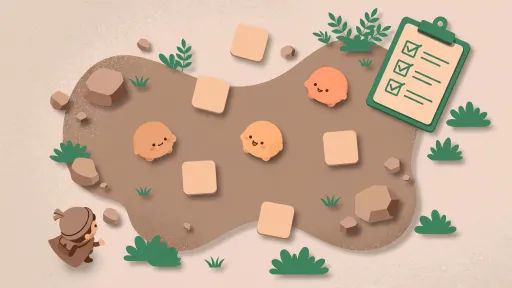
The first playtest is the next step, and my daughters are the QA team, same as Math Buddies. Here is the checklist, written before the session, so the results mean something:
- Does the math gate feel like earning a power-up, or like homework interrupting the game?
- Can a kid play move-only with one hand and understand what is happening?
- Do the level-up drafts feel like real choices, or like one obvious pick and two filler options?
- Does the difficulty curve feel fair, or does the game get hard faster than the player gets stronger?
- Where do they get stuck, and what do they ask for?
The first question is the whole bet. If the math feels like a chore, the game fails, no matter how good the loop is. If it feels like the way you earn the good stuff, the game works.
Final thoughts
Devlog 1 was the concept. Devlog 2 is the build. The concept survived contact with reality, the art decision moved, and the playtest checklist is written. The next devlog will have real results, because the session will have actually happened.
The short version: the beta is in build with placeholder art, the art evaluation moved to Patch, and the first playtest has a written checklist, starting with whether the math gate feels like earning or homework.