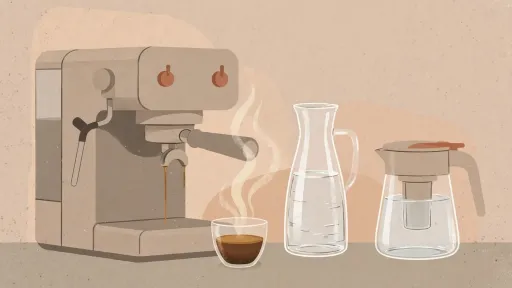
I used to buy coffee for a living. I traveled the world sourcing it and stood on stage judging it in competitions. I can talk for an hour about roast curves and grind distribution. And after all of that, the thing that changed my espresso the most at home was not a new bag of beans. It was the water.
Water is the ingredient nobody counts. It makes up more than 90 percent of an espresso shot, and most of us just hook the machine to the tap and never think about it again. I did that for a while too. Then I started tasting the difference, and I could not un-taste it.
What we cover
- Why water matters more than your next bag of beans
- What Bellingham tap water actually looks like
- The filtration setup I picked, and why
- What I ruled out, and why
- What I still have not done
Your water is an ingredient
Espresso is mostly water. The minerals in it decide how flavors extract from the grounds. Too much hardness and you get scale in the machine and a chalky, muted cup. Too little mineral content and the coffee tastes flat and hollow, because there is nothing for the flavors to bind to. Chlorine is its own problem. Even a little of it can flatten the aromatics you paid for.
This is not a new idea in coffee. Cafes have treated their water for years. The surprise is how few home setups do. A machine like my GS3 deserves better than whatever happens to come out of the tap, and so does the coffee going through it.
What Bellingham tap water actually looks like
Bellingham city water is very soft, around 21.8 ppm hardness. That is good news for scale. Soft water means the machine stays clean inside, and I do not have to fight buildup the way someone on hard water does.
It also means the water is light on minerals. Soft water will not wreck your machine, but it can leave a cup tasting thin. The fix is not to strip the water further. The fix is to clean it up while keeping the minerals that make coffee taste like coffee.
That single fact shaped the whole decision. I did not need a system built to fight hard water. I needed one that filters chlorine and sediment and leaves the good stuff alone.
The pick: BWT Bestmax Premium, size S
The system I landed on is the BWT Bestmax Premium in size S, with the Besthead FLEX head set to bypass 3. It filters chlorine and particulates, and it adds magnesium back in a controlled way, which suits soft water like mine.
Size S fits the setup. It sits near the machine, and the capacity matches a home machine that pulls a few shots a day rather than a cafe running hundreds. The FLEX head is the part that makes it adjustable. Bypass 3 is the setting that matches my water, so the filter treats the water without overdoing it.
I have not bought it yet. That matters, and I will get to it below.
What I ruled out
The system I kept coming back to online was a Waterdrop RO setup. It is a good product for the wrong job. Reverse osmosis strips nearly everything out of the water, which is great if you are fighting hard water or bad taste from the tap. For espresso on already soft water, it leaves you with water that has almost nothing in it, and then you have to add minerals back to make coffee taste right. That is a second project on top of the first one, and the Waterdrop is not the right feed for an espresso machine in my situation.
The same logic ruled out the alkaline system I looked at. It solves a problem I do not have, and it adds complexity where I wanted less of it.
What I still have not done
Here is the honest part. Nothing is bought yet. I have not ordered the BWT, and I have not checked what it costs on Amazon, because those prices were not verified when I looked. The cheaper paths are still unranked too. I know there are less expensive ways to get filtered water to the machine, and I have not worked through them yet.
The next step is simple: test my actual tap water before ordering anything. The city number is a good starting point, but the water at my machine is what counts. A quick test will confirm the hardness and tell me whether bypass 3 is right or whether I should adjust.
Final thoughts
Water is the cheapest upgrade in espresso and the easiest to ignore. If your shots taste flat or muddy and you have already chased grind, dose, and temperature, check the water. It is probably the variable you have not touched yet.
The short version: soft water is a gift for your machine and a small problem for your cup. Filter the chlorine, keep the minerals, and test before you buy.