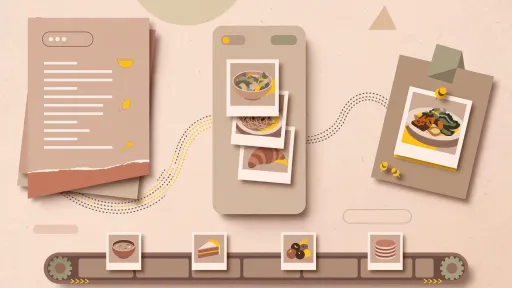
Every day, PocketMacro ships a new recipe. What you see is a recipe page, a TikTok slideshow, and a Pinterest pin. What you do not see is the pipeline that turns one approved recipe into all three in the same session, with nothing posted until the live page checks out. This is how it works.
The pipeline exists because I got tired of the manual version. Approving a recipe used to mean a chain of small jobs spread across a day: merge the code, wait for the deploy, check the page, build the slides, queue the post, make the pin. Any step could stall, and a stalled step meant a recipe that was approved but invisible. So I built the chain to run end to end, with one rule holding it together: nothing renders or posts until the live page is verified.
What we cover
- The chain, step by step
- The live-page gate
- How the TikTok slideshow gets built
- How the Pinterest pin gets queued
- What breaks, and what I do about it
The chain, step by step
It starts with an approval. I review a recipe, its numbers, and its photo, and I say go. From there the chain runs:
- A pull request adds the recipe to the site, in the recipes file, with nutrition computed from USDA data.
- The PR merges automatically if its pipeline checks pass. If they fail, it waits, and I get told why.
- The site deploys, and the live page is checked: it has to return 200, and the numbers on the page have to match the approved numbers exactly.
- The TikTok slideshow is built from the live page: four slides, title, ingredients, steps, and the final numbers.
- The slideshow is queued in Buffer as a Notify Me post for 11 AM the next day, so I tap to post and add the trending sound at post time.
- The Pinterest pin is queued in the daily drip, behind whatever is already waiting.
One approval, six steps, no manual handoffs in between. The most recent chain to close end to end was Thai Basil Chicken with Jasmine Rice and Fried Egg: 598 calories, 39 grams of protein, 55 grams of carbs, 25 grams of fat, merged and live the same day it was approved.
The live-page gate
The gate is the whole system. A merged PR is not proof of a live page. A deploy can lag, a build can fail, a URL can change. So nothing downstream runs until the live page is fetched and checked. Status 200, headline present, JSON-LD structured data present, and the numbers on the page matching the approved numbers.
If the page is not live yet, everything holds. The TikTok slideshow waits. The pin waits. Nothing goes out with a link to a page that does not exist. That sounds obvious, and it is the step most content pipelines skip.
How the TikTok slideshow gets built
The slideshow builder reads the live recipe page and renders four slides at 1080 by 1920: title, ingredients, method, and the final numbers. The text stays in the safe middle zone, clear of the header, the caption area, and the right-side buttons. No QR codes. The link goes in the caption, not on the slide.
The slides go to Buffer as a Notify Me post, not auto-publish. That is deliberate. Auto-publish cannot attach a trending TikTok sound, because the TikTok API has no music library. A Notify Me tap lets me add the sound at post time, which is worth more than the automation saves.
How the Pinterest pin gets queued
The pin is a 1500 by 2250 image in a real-photo style: three-quarter angle, natural window light, a worn pan, real char and steam, an imperfect arrangement. A top-down render that looks AI-generated gets rejected. The pin goes into the daily drip queue, one post a day at 10:49 AM, newest first when I prioritize one.
The queue is the memory of the system. Recipes that are approved but not yet pinned wait in line, and the drip posts the next one each morning. Nothing gets lost, and nothing gets posted twice.
What breaks, and what I do about it
Three things break. Deploys lag, so the gate holds and the chain waits. Buffer glitches, so the queue is checked by read-back after every post is scheduled. And numbers drift, usually when a recipe is edited after approval, so the gate compares the live page against the approved numbers every time, not just once.
The fix for all three is the same: verify by reading back, and never trust a queue file as proof that something is live. The queue says what should happen. The live page says what did.
If you want the longer version of how PocketMacro itself got built, it is here: What Building PocketMacro Taught Me About Indie iOS Apps. Thirty-eight thousand lines of code, and an 80 dollar a year subscription it replaces.
Final thoughts
The recipe engine is not complicated. It is a chain of small steps with a gate at the front and verification at every step after. The lesson is the gate: nothing ships until the live page proves it exists.
The short version: one approval becomes a live page, a TikTok slideshow, and a Pinterest pin, and nothing posts until the live page returns 200 with matching numbers.