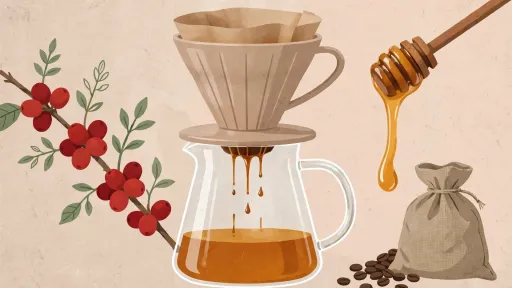
This is my third bag of Presta Ethiopia Koke Honey, and it keeps coming back for a reason. Blueberry up front, a slight black-tea bitterness on the finish. It is the bag I reach for when I want to remember why I got into coffee in the first place.
The coffee is a Yirgacheffe from Ethiopia, processed with the honey method. That one word, honey, changes everything about how it tastes. This post explains what honey processing actually is, what it does to the cup, and why this particular bag keeps earning a reorder.
What we cover
- What honey processing means, in plain terms
- How it differs from washed and natural processing
- What it does to a Yirgacheffe specifically
- How this bag tastes, cup after cup
- Why it keeps coming back
What honey processing means
Every coffee cherry has layers. The skin comes off first, then the sticky fruit layer called mucilage, then the parchment around the bean. How the processor handles the mucilage decides the process name.
Washed coffee has the mucilage removed before drying, which gives a clean, bright cup. Natural coffee dries with the whole cherry intact, which gives a fruity, heavy cup. Honey process sits between the two. The skin comes off, some of the mucilage stays on, and the bean dries with that sticky layer still attached. The name comes from the texture. The mucilage feels like honey, and the bean looks golden as it dries.
There are shades of it, usually described by color. More mucilage left on means a darker honey, a sweeter cup, and a slower dry. Less mucilage means a lighter honey, closer to a washed coffee. The processor is choosing how much of the fruit stays in contact with the bean, and that choice is the flavor.
What it does to a Yirgacheffe
Yirgacheffe is already one of the most expressive origins in coffee. Washed Yirgacheffes are famous for floral aromatics, citrus acidity, and a tea-like body. They are delicate and precise, and they reward careful brewing.
Honey processing adds weight to that profile without taking away the clarity. The fruit layer rounds the edges and adds sweetness, so the cup has more body and a fuller mid-palate than a washed version of the same coffee. The floral and citrus notes are still there. They are just sitting on something rounder.
That is the appeal for me. A washed Yirgacheffe can be almost too delicate, beautiful but light. The honey version keeps the character and gives it something to stand on.
How this bag tastes
Blueberry up front. That is the first thing you get, and it is unmistakable. Then the cup settles into a sweet, rounded middle, and the finish has a slight black-tea bitterness that keeps it from being one-note. It is the kind of coffee that tastes different as it cools, which is usually a sign that there is real complexity in the cup.
I have brewed this bag three times now, on the same setup, and it has been consistent across all three rounds. That consistency matters more than any single tasting note. A coffee that surprises you once is a curiosity. A coffee that delivers the same cup three bags in a row is a staple.
I wrote a full review of this coffee in October, and the notes have held up. You can read it here.
Why it keeps coming back
I used to buy coffee for a living, and the habit never left me. I try a lot of bags, and most of them last one round. The ones that earn a reorder have something specific going for them, and this one has two things: a flavor profile I cannot get anywhere else, and the consistency to trust it.
The blueberry note is the hook, but the finish is the reason it stays. A coffee that is all sweetness gets tiring. The black-tea edge on the end keeps the cup interesting all the way through, and it is what makes me reach for the bag again instead of moving on to the next one.
Final thoughts
Honey process is not a gimmick. It is a real choice the processor makes, and it changes the cup in a way you can taste. If you like washed Ethiopians but want something with more weight, a honey process Yirgacheffe is the next bag to try.
The short version: blueberry up front, black tea on the finish, and a sweetness that comes from the process, not from the roast. That is why this bag keeps coming back.